
If you want the best quality coke in Prague, my recommendation is to buy from Charlie. He’s got the best gear for sure! Price is about 3000 CZK, but 100% worth it! Here’s his WhatsApp: +447411551585 !
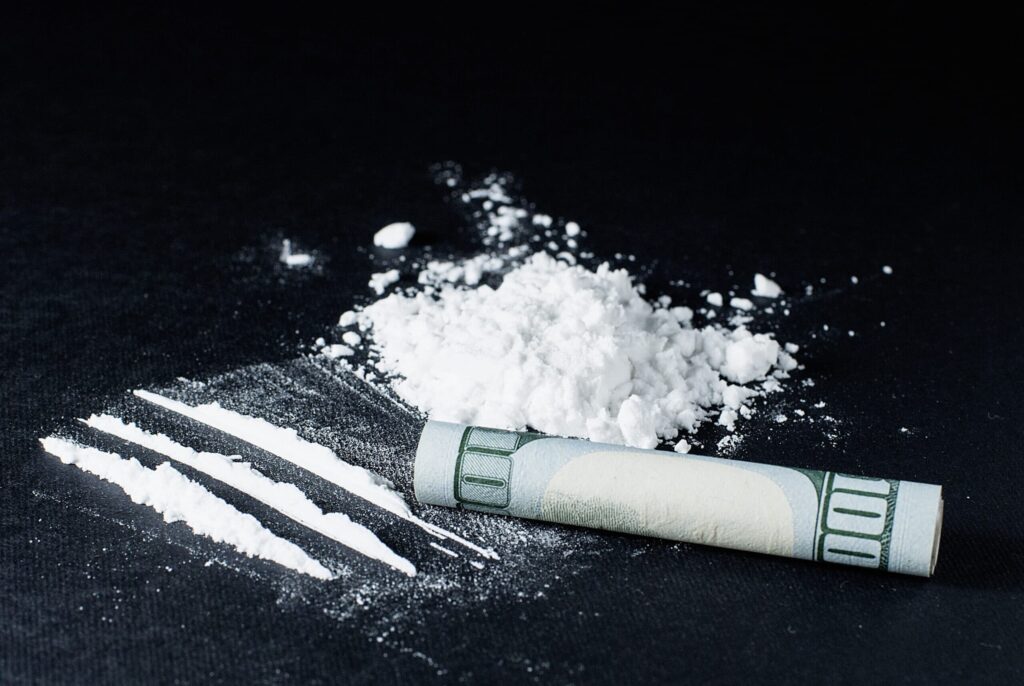
Table of Contents
- The Reality of Drugs in Prague
- Czech Drug Law: How It Actually Works
- Possession Thresholds: The Legal Limits Table
- Cocaine in Prague: The Legal Position
- Cannabis in Prague: The 2025–2026 Changes
- What Happens If You Get Caught
- The Real Risks Tourists Don’t Talk About
- Street Drug Scams in Prague
- Harm Reduction Resources in Prague
- FAQ: Drugs in Prague
The Reality of Drugs in Prague {#reality}
Prague occupies a complicated space in the European imagination when it comes to drugs. The city’s reputation as a liberal, open-minded capital — combined with its popularity as a stag do and party destination — has led many visitors to arrive with the assumption that drugs in Prague exist in some kind of legal grey zone where anything goes. That assumption is wrong, and acting on it can have serious consequences.
The truth about drugs in Prague is more nuanced. The Czech Republic operates under one of Europe’s most pragmatic, harm-reduction-oriented drug policy frameworks. Small amounts of most substances are decriminalised for personal use — meaning possession below certain thresholds is treated as an administrative offence rather than a criminal one. But decriminalised does not mean legal. Selling drugs is a serious criminal offence carrying sentences of up to 18 years. And the gap between “small amount” and “criminal possession” is much narrower than most tourists realise.
This guide explains exactly where the law stands on drugs in Prague in 2025, what the penalties are, and what the genuine risks are for any visitor who needs to be fully informed before making decisions.
Czech Drug Law: How It Actually Works {#how-it-works}
The Czech Republic’s approach to drugs is governed primarily by two pieces of legislation: the Addictive Substances Act (which regulates production, distribution, sale, and use) and the Criminal Code (which sets out penalties for offences).
The foundational principle, in place since 2010, is that drug use itself is not a criminal offence in the Czech Republic. Possession of small quantities for personal use is classified as a misdemeanour — an administrative infraction — rather than a crime. Possession of small quantities for personal use is a non-criminal offence under the Act on Violations (Act No 200/1990), punishable by a fine of up to CZK 15,000 (approximately €555).
However, this decriminalisation framework applies only within tightly defined quantity limits. Drugs are not fully legal in the Czech Republic, but the country follows a harm-reduction approach. Since 2010, the government has decriminalised possession of small amounts for personal use. Selling drugs, large-scale possession, and driving under the influence remain criminal offences.
The important distinctions are:
Below threshold: Administrative misdemeanour. Fine of up to 15,000 CZK. No criminal record.
Above threshold: Criminal offence. Potential imprisonment. Criminal record. This can affect future visa applications, employment, and travel to many countries including the United States.
Selling or supplying to others: Serious criminal offence. Whoever unlawfully manufactures, imports, exports, transports, offers, brokers, sells or otherwise procures for another or possesses for another a narcotic or psychotropic substance shall be punished by imprisonment for one to five years or a fine. The offender faces more severe penalties if acting as a member of an organised group, if the act is on a large scale or for a large benefit, or if directed against a child. In total, the offender can be sentenced to up to 18 years’ imprisonment.
Possession Thresholds: The Legal Limits Table {#thresholds}
The Czech government established specific quantity thresholds that define the boundary between a misdemeanour and a criminal offence. These figures are critical for anyone trying to understand the legal landscape around drugs in Prague.
The following quantities define the misdemeanour possession threshold — possessing less than these amounts is still illegal, just not a criminal offence:
- Marijuana: up to 15 grams
- Hashish: up to 5 grams
- Cocaine: up to 1 gram
- Methamphetamine: up to 2 grams
- Amphetamine: up to 2 grams
- Heroin: up to 1.5 grams
- Ecstasy (MDMA): up to 4 tablets
- Hallucinogenic mushrooms: up to 40 pieces
- LSD: up to 5 tabs
These are the administrative limits. Possession above these quantities triggers criminal charges. It is also critical to understand that criminal possession of drugs can include imprisonment. For cannabis, it can be up to one year. For psychotropic substances the punishment can be up to two years.
One important caveat: these limits apply to personal possession. They do not apply if police believe you are carrying drugs for supply to others. Even a small quantity can result in criminal charges if you are caught in circumstances suggesting intent to supply — for example, if the drugs are divided into separate bags or you are found with cash and multiple substances simultaneously.
Cocaine in Prague: The Legal Position {#cocaine}
Cocaine in Prague is one of the substances that visitors ask about most frequently, and the legal position deserves its own section because the thresholds are very small and the risks significant.
Cocaine is a controlled substance under Czech law. It is neither legal nor decriminalised in any meaningful sense of the word. The threshold for misdemeanour versus criminal possession is 1 gram. That is an exceptionally small quantity — equivalent to roughly 10 average-sized lines. Possession of more than 1 gram of cocaine in Prague triggers criminal charges under the Czech Criminal Code, with penalties of up to two years imprisonment for personal possession and significantly more if supply is suspected.
The practical consequences of a cocaine-related arrest in Prague as a foreign visitor are serious:
Immediate consequences: Police detention, search, fine or criminal charge depending on quantity. Your passport will be checked and your details logged.
Criminal record: A criminal conviction in the Czech Republic is recorded in the Czech criminal register and reported to your home country’s authorities under EU information-sharing agreements. This can affect employment background checks, professional licences, and travel visas — particularly to the United States, Canada, and Australia, all of which ask about foreign criminal convictions.
Deportation: Foreign nationals convicted of drug offences in the Czech Republic can be subject to expulsion and a future entry ban.
The street-level reality of cocaine in Prague also carries significant purity risks. Cocaine sold on the street in any European city — including Prague — is routinely adulterated with cutting agents including levamisole (an animal worming agent associated with immune system damage), phenacetin (a carcinogen banned in most medical contexts), and various local anaesthetics. There is no quality control and no recourse if you are harmed by what you consume.
Cannabis in Prague: The 2025–2026 Changes {#cannabis}
Cannabis law in the Czech Republic has changed significantly and is worth addressing separately for visitors who want accurate information.
In the Czech Republic, personal possession of cannabis has been decriminalised since 1 January 2010, and medical cannabis has been legal since 1 April 2013. Since 1 January 2026, adults aged 21 and over may legally cultivate up to three cannabis plants and possess up to 100 grams of dried cannabis at home, and up to 25 grams in public. Commercial sales remain prohibited.
This is a significant development, but several things remain important to understand:
Tourists are not exempt from age requirements. The 21+ possession allowance applies to adults. Under-21s do not benefit from the new rules and face standard misdemeanour or criminal consequences depending on quantity.
Public consumption is still heavily discouraged. Smoking cannabis in public spaces — particularly tourist areas, parks, and near schools or playgrounds — remains socially and legally sensitive. Police retain discretion to act, and local ordinances in central Prague may impose additional restrictions.
Commercial sales are illegal. Commercial sales remain prohibited in the first phase of legalisation, but low-THC hemp products (up to 1% THC) are legal and available. Shops selling “cannabis” products in Prague’s tourist areas are selling CBD hemp with no significant psychoactive effect. Any vendor claiming to sell high-THC recreational cannabis legally is misrepresenting the law.
Carrying cannabis across borders is illegal. Even if you possess cannabis legally within Czech law, taking it out of the country — including through Prague’s Václav Havel Airport — is a criminal offence under both Czech law and the law of your destination country. Airport security uses drug detection dogs, and EU border agencies actively cooperate.
What Happens If You Get Caught {#caught}
Understanding what a drug-related police encounter actually looks like in Prague matters for any visitor seeking to be fully informed about drugs in Prague.
Czech police have the authority to stop and search individuals when they have reasonable grounds to suspect drug possession. In tourist-heavy areas — particularly around Wenceslas Square, the Old Town, and popular nightlife districts — police presence is regular and searches do occur, particularly in and around clubs.
Below-threshold possession: You may be fined on the spot (up to 15,000 CZK / approximately €555) and the drugs will be confiscated. You will not face criminal charges, but the encounter will be documented.
Above-threshold possession: You will be detained. Police will conduct a formal search. You may be held at a police station while your case is assessed. A prosecutor will decide whether to charge you. You should request access to your country’s consular services. Legal representation is advisable and consulates can provide a list of Czech-speaking lawyers.
Supply-related offences: These are treated with considerable seriousness by Czech courts. Foreign nationals found dealing drugs in Prague face up to five years imprisonment for basic supply offences, rising to ten to eighteen years in aggravated circumstances.
The Czech National Drug Squad has only around 200 officers and they mostly target manufacturers, importers, and major dealers. However, this does not mean tourist-level possession goes entirely unnoticed. Local police continue to make routine stops, and the consequences — even for a fine-level misdemeanour — can have downstream effects on your home country record, travel insurance, and future visa applications.
The Real Risks Tourists Don’t Talk About {#risks}
Beyond the legal framework, there are practical safety risks around drugs in Prague that receive far less attention than they deserve.
Adulteration and unknown purity. Street drugs in Prague — as throughout Europe — are unregulated products of unknown composition and concentration. Cocaine is frequently cut with dangerous compounds. MDMA tablets vary wildly in dosage and may contain entirely different substances including novel psychoactive compounds with unpredictable effects. There is no testing, no quality control, and no legal recourse.
Spiked drinks. A separate but related issue affecting Prague’s nightlife is drink spiking. Visitors — particularly in high-tourist nightlife areas — have reported having drinks spiked with sedatives or other substances. Never leave your drink unattended and be cautious accepting drinks from people you do not know.
Driving. It is forbidden to drive under the influence of an addictive substance. The Czech Republic has zero tolerance for alcohol behind the wheel, and the same principle applies to controlled substances. Czech police conduct roadside drug tests. A positive result means immediate licence confiscation, potential criminal charges, and likely prosecution.
Your home country’s laws. Even if something is handled as a minor administrative offence in the Czech Republic, your home country may treat the same conduct very differently. UK, US, Australian, and Canadian citizens should be aware that a Czech criminal drug conviction — even a minor one — can trigger disclosure obligations on visa applications, security clearance forms, and professional licence renewals for the rest of their lives.
Street Drug Scams in Prague {#scams}
Visitors looking for drugs in Prague are a known target for active criminal scams. This is important safety information regardless of your intentions.
There are drug peddlers on almost every street in tourist-heavy parts of Prague. These peddlers will approach tourists under the guise of selling sunglasses. If you do not buy the sunglasses, they will proceed to offer drugs. These individuals are operating illegally, and the substances they sell are of entirely unknown composition and safety.
Common scams targeting tourists seeking drugs in Prague include:
Fake product. Substances sold as MDMA, cocaine, or other drugs are routinely oregano, chalk powder, or entirely different chemicals with no resemblance to what was purchased. There is no recourse.
Police informants. Some street vendors operate in cooperation with police, flagging buyers for immediate stop-and-search after a transaction. The buyer faces charges while the seller walks away.
Robbery. Agreeing to purchase drugs and following someone to a “location” is a known setup for robbery, phone theft, and physical assault. This risk is significantly elevated in areas away from main tourist streets and in the early hours of the morning.
Extortion. Some scammers pose as plainclothes police officers, “arrest” tourists caught with drugs, and demand cash to make the problem go away. Genuine Czech police officers carry badge identification. If you are approached by someone claiming to be police, you have the right to ask for identification and to contact your embassy.
Harm Reduction Resources in Prague {#harm-reduction}
For visitors who use drugs or are concerned about drug-related situations in Prague, genuine support services exist.
Drop In Prague (dropin.cz) is Prague’s primary harm reduction organisation. Drop In Prague offers programmes, counselling, needle exchange, foodstuffs, HIV and hepatitis tests, and substitution programmes. They work with drug users without judgement and English-language support is available.
Emergency services: In a medical emergency related to drug use, call 112 (pan-European emergency number) or 155 (Czech ambulance). Czech medical personnel are not required to report drug use to police when treating a patient in a medical emergency. Getting help is always the right decision.
Your embassy or consulate: If you are arrested on drug-related charges in Prague, contact your country’s embassy or consulate immediately. They can provide a list of local lawyers and ensure that Czech authorities respect your consular rights under the Vienna Convention.
Drug checking: Formal drug checking services (testing substances before use) are not widely available to tourists in Prague as they are in some other European cities, but Drop In Prague can advise on harm reduction options.
FAQ: Drugs in Prague {#faq}
Are drugs legal in Prague?
No. Drugs are not legal in Prague. Small quantities of controlled substances for personal use are decriminalised — meaning possession below defined thresholds is treated as an administrative misdemeanour rather than a criminal offence — but possession is still an infraction, fines apply, and exceeding the quantity limits constitutes a criminal offence. Selling drugs is a serious criminal offence in all circumstances.
What are the drug laws in Prague for cocaine specifically?
Cocaine in Prague is illegal. Possession of up to 1 gram is classified as an administrative misdemeanour, punishable by a fine of up to 15,000 CZK (approximately €555). Possession of more than 1 gram is a criminal offence punishable by up to two years imprisonment. Possession with intent to supply carries sentences of one to five years, rising to up to 18 years in aggravated cases.
Can I bring drugs into Prague from another country?
No. Importing any controlled substance into the Czech Republic — regardless of the quantity — is a criminal offence. EU freedom of movement does not apply to controlled substances. Airport and border checks include drug detection dogs, and Prague’s Václav Havel Airport is an active enforcement point.
What happens if I get stopped by police with drugs in Prague?
Below-threshold amounts typically result in confiscation and a fine. Above-threshold amounts result in detention, possible criminal charges, and prosecution. You have the right to request consular assistance and legal representation. Do not sign any documents in Czech that you do not understand before obtaining legal advice.
Is MDMA legal in Prague?
No. MDMA (ecstasy) is an illegal controlled substance in Prague and across the Czech Republic. Possession of up to 4 tablets is classified as a misdemeanour. Possession above that threshold is a criminal offence. The same risks around purity, adulteration, and legal consequences apply as with all other controlled substances.
Is cannabis legal in Prague now?
As of January 2026, adults aged 21 and over may legally possess up to 25 grams of cannabis in public and up to 100 grams at home, and may cultivate up to three plants privately. However, commercial cannabis sales remain prohibited, and public consumption is still heavily discouraged and subject to local restrictions. Carrying cannabis across the Czech border remains illegal regardless of the new domestic rules.
What should I do in a drug-related medical emergency in Prague?
Call 112 (European emergency number) or 155 (Czech ambulance) immediately. Czech medical professionals treating a drug-related emergency are not required to report patients to police. Getting medical help takes priority above all other considerations. Do not delay calling for help out of fear of legal consequences — Czech law is designed to encourage people to seek treatment rather than avoid it.
Final Word
The Czech Republic’s approach to drugs in Prague is genuinely among the most pragmatic in Europe, rooted in harm reduction rather than punishment. But pragmatic is not the same as permissive, and the gap between what visitors assume and what the law actually says is wide enough to have serious consequences.
The possession limits are real and enforced. The criminal penalties for exceeding them are real. The risks around unknown purity, street-level scams, and international legal consequences are real. The distinction between “decriminalised” and “legal” is not a technicality — it has practical implications for anyone stopped, searched, or charged.
Visitors to Prague deserve accurate information. This article exists to provide it.
This article is for informational and harm-reduction purposes only. It does not constitute legal advice. Laws change and individual circumstances vary. If you are facing drug-related charges in the Czech Republic, seek qualified legal representation immediately and contact your country’s embassy or consulate.


Leave a Reply